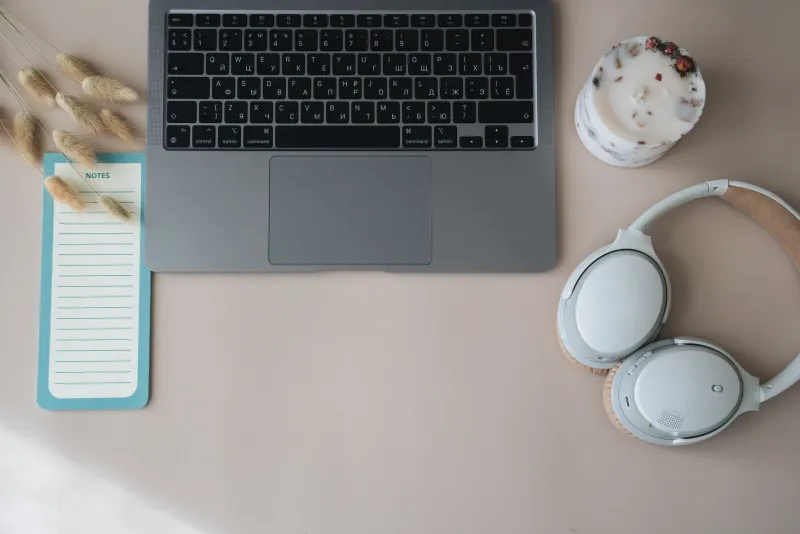
Going Offline on Purpose: Why So Many of Us Are Reaching for Analog Again
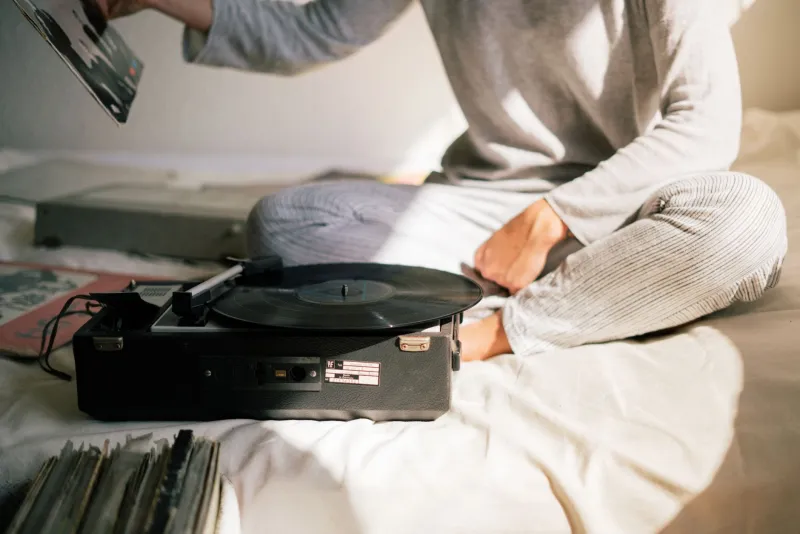
It feels a little counterintuitive at first glance. Gen Z — the generation that grew up with smartphones practically grafted to their hands — is buying record players. Millennials who've spent years optimizing their digital workflows are filling paper notebooks. Across age groups and income brackets, there's a palpable hunger for things that are slow, tactile, and stubbornly offline.
This isn't nostalgia in the sentimental sense. It's something more deliberate — a conscious recalibration of how people want to spend their attention and what they want their daily lives to actually feel like.
The Exhaustion Is Real
To understand the analog revival, you have to start with what it's a reaction to. The last several years have been a full-immersion experiment in digital living. Remote work, streaming everything, social media as a social life substitute, shopping that's entirely frictionless and instant. In a lot of ways, it worked. Convenience went through the roof.
But something else happened too. Screen time data from across the US consistently shows adults averaging well over seven hours of daily screen exposure. Attention spans have measurably shortened. Anxiety and burnout have become so normalized that we've basically stopped flagging them as unusual. The always-connected life promised us more — more access, more efficiency, more connection. And it delivered. It just also delivered a kind of low-grade depletion that's hard to shake.
The analog turn is, in part, a response to that depletion.
Paper Is Having a Moment
Notebook sales in the US have been climbing steadily, with premium stationery brands seeing particularly strong growth among buyers under 35. That's a demographic that has every digital note-taking tool imaginable at their fingertips — and they're choosing paper anyway.
Talk to anyone who's made the switch and the reasoning tends to be similar: writing by hand feels different. It's slower, which turns out to be the point. The physical act of forming letters on a page engages your brain differently than typing, and research supports the idea that handwritten notes improve retention and comprehension. But beyond the cognitive benefits, there's something harder to quantify — a sense of presence, of being in the task rather than just processing it.
Brands like Leuchtturm1917, Appointed, and Field Notes have tapped into this beautifully. Their products aren't just functional — they're objects you want to hold and use. The design matters. The texture of the paper matters. These are notebooks people buy because they like them, not just because they need them.
Vinyl's Second Act (And Third, and Fourth)
If notebooks represent the quiet end of the analog revival, vinyl records are the loud end. The US vinyl market has now outpaced CD sales for multiple consecutive years — a milestone that would've seemed absurd to predict two decades ago. Record stores are reopening. Turntable manufacturers are backlogged on orders. A new generation of listeners is discovering that music sounds different when it's something you have to be a little intentional about.
You can't shuffle a record. You can't skip to the algorithm's next recommendation. You pick an album, you put it on, and you listen to it — ideally without also doing six other things at the same time. That constraint, which sounds like a limitation, has become part of the appeal.
Brands like Audio-Technica and Pro-Ject have done a smart job of meeting this moment, offering turntables that look great, perform well, and don't require you to be an audiophile to appreciate them. The barrier to entry has dropped significantly, which has broadened the audience considerably.
Board Games and the Return of the Room
Another data point worth noting: the tabletop gaming industry in the US has grown substantially over the past several years, with specialty game cafes popping up in cities from Portland to Nashville to Brooklyn. Board games, card games, and tabletop RPGs are pulling people away from screens and — crucially — into the same physical room as other people.
This feels significant. A lot of what people describe missing from pre-pandemic life wasn't specific activities so much as the texture of real-time, in-person interaction. Board games provide a structure for exactly that. They're a reason to gather, a shared focus, and a source of the kind of unscripted moments that don't really happen over video calls.
Games like Wingspan, Ticket to Ride, and Codenames have developed genuine mainstream followings that extend well beyond the traditional gaming community. They're showing up as housewarming gifts and holiday staples for people who never would have called themselves 'gamers.'
Handcrafted Goods and the Value of Slowness
The handmade and artisan market tells a similar story. Platforms supporting independent makers have seen sustained growth, and consumers increasingly cite knowing the story behind an object as part of its appeal. A hand-thrown ceramic mug from a small pottery studio in Vermont means something different than an identical-looking mug from a big-box store — even if the coffee tastes the same.
This isn't just sentimentality. It's a recalibration of what value means. In a world where almost anything can be produced cheaply and shipped overnight, the things that take time and skill to make carry a different kind of weight. They're a counterpoint to disposability.
Emerging brands are building entire identities around this. Makers who document their process, who are transparent about materials and sourcing, who make things in small batches rather than at scale — they're finding audiences that are deeply loyal precisely because the product represents something the broader marketplace can't replicate.
What This Shift Is Really About
At its core, the analog revival isn't really about rejecting technology. Most people participating in it still use their smartphones constantly, still stream shows, still rely on apps for everything from navigation to groceries. The shift is more nuanced than that.
It's about creating pockets of experience that feel different — slower, more deliberate, more sensory. It's about having some part of your day that isn't mediated by a screen, that requires your hands and your full attention, that produces something you can hold or hear or share with someone in the same room.
For brands and retailers paying attention, the message is clear: consumers aren't just buying products. They're buying experiences and feelings. They're buying back a little bit of the texture that modern life can sometimes sand away.
And honestly? There's something kind of beautiful about that.