Small Space, Sharp Eye: Choosing Pieces That Pull Double Duty
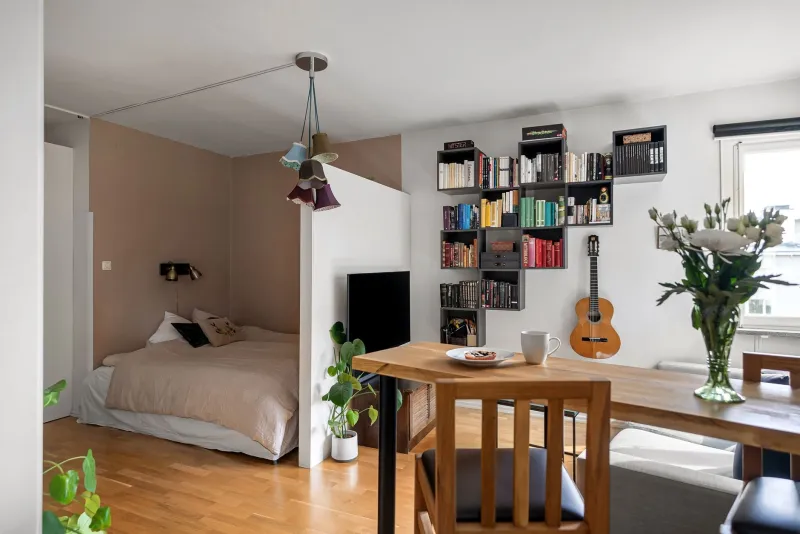
Apartments are getting smaller. Storage is getting pricier. And the dream of a sprawling walk-in closet, at least in most American cities, has become exactly that—a dream. But here's the thing: a lot of people living in tight quarters have figured something out that their roomier counterparts haven't. Constraints make you more creative, and more creative usually means more curated.
The best small-space living isn't about squeezing more in. It's about choosing better from the start.
Why Less Space Forces Better Decisions
Design psychologists have a term for the cognitive relief that comes from an uncluttered environment: attentional restoration. Basically, visual noise is mentally exhausting. When your surroundings are filled with things that don't quite fit, don't quite work, or don't quite belong, your brain is quietly processing all of it—even when you're not consciously aware of it.
Small spaces, paradoxically, can be easier to live in once you've committed to editing. Every item has to justify its footprint. That pressure to justify leads to better purchasing decisions upfront and a more intentional home overall.
Jamila Osei, an interior stylist based in Brooklyn who specializes in apartments under 700 square feet, describes the mindset shift her clients go through: "People come in thinking their problem is storage. But really, it's acquisition. Once they stop buying things that don't have a clear role, the storage problem mostly solves itself."
The Furniture Equation: Form Times Function
In a larger home, you can afford a piece that does one thing beautifully. In a compact space, that's a luxury you usually can't justify. The new standard for small-space furniture is form times function—pieces that look great and serve more than one purpose.
A few categories worth focusing on:
Seating with storage. Ottomans with interior compartments, benches with lift tops, and sofas with built-in drawers all give you a place to sit and a place to put things. In a studio or one-bedroom, that combination is invaluable.
Expandable dining. A table that seats two on a Tuesday and eight on Thanksgiving is one of the smartest investments a city apartment dweller can make. Wall-mounted fold-downs and extendable designs have come a long way aesthetically—they no longer look like dorm furniture.
Beds that work harder. Platform beds with under-frame storage, lofted frames in studio setups, and daybeds that function as sofas during waking hours all reclaim square footage that a standard bed frame just swallows.
The key is not to compromise on quality for the sake of multi-functionality. A piece that does two things poorly is worse than a piece that does one thing well. Look for solid construction, finishes that hold up, and designs that feel intentional rather than gimmicky.
Building a Wardrobe for a Smaller Closet
The same principle applies to your clothing. A capsule wardrobe isn't just a Pinterest concept—for people with limited closet real estate, it's a practical necessity.
The idea is to build around anchors: pieces that work in multiple contexts without requiring a lot of supporting cast. A well-cut blazer that works over a t-shirt on the weekend and over a button-down for a client meeting. Trousers in a neutral that pair with everything you own. A dress that reads casual with sneakers and polished with heeled mules.
When each piece in your closet can be worn at least three different ways, your wardrobe punches well above its weight. You get more outfit combinations from fewer items, which also means less morning decision fatigue—a real and underrated benefit.
Stylist and wardrobe consultant Priya Mehta, who works with clients in Chicago and remotely across the US, recommends what she calls the "10-outfit test" before buying anything new. "Before I add something to my closet, I ask: can I build 10 different outfits around this piece using what I already own? If I can't get to at least five, I put it back."
Color, Scale, and the Illusion of Space
Beyond the functional side of things, there's a visual dimension to small-space curation that's worth understanding. The right choices in color and scale can make a room feel significantly larger than its square footage suggests.
Light, cohesive color palettes make walls recede and create a sense of airiness. That doesn't mean everything has to be white—but maintaining a consistent tonal range throughout a space prevents the visual choppiness that makes small rooms feel cluttered.
Appropriately scaled furniture matters more than most people realize. Oversized sofas and bulky armchairs are common mistakes in small apartments. Pieces with legs—rather than those that sit directly on the floor—also help, because visible floor space reads as open space.
Mirrors and reflective surfaces are old tricks, but they work. A well-placed mirror can effectively double the perceived depth of a room.
Investing Up Instead of Accumulating Out
The financial logic of small-space curation is worth spelling out. Buying fewer, better things costs more upfront but less over time. A $400 sofa that lasts 15 years is a better investment than three $150 sofas that each last five—and takes up no additional space in the interim.
This is the mindset shift that unlocks the whole approach: stop thinking about price tags and start thinking about cost-per-use. Quality pieces that last, adapt, and stay relevant season after season are the foundation of a home and a wardrobe that actually work.
Small spaces aren't a limitation. They're an invitation to be more deliberate—and deliberate, as it turns out, looks really good.